Category Archives: Organizational Culture

How the NFL’s work to mitigate head injuries and unsportsmanlike conduct was dealt a deadly blow

How the NFL’s work to mitigate head injuries and unsportsmanlike conduct was dealt a deadly blow

Wow.  Talk about unsportsmanlike conduct.

Last night Myles Garrett dealt a blow that will reverberate for at least the immediate future of his career.  Why do I believe it is only the immediate future?

We don’t seem to have much of an attention span these days.

If there is a lesson to take from this event, then, we’d best take it quickly.

Let’s start with the immediate participants.  Garrett and Steelers quarterback Mason Rudolph are both, albeit in unequal portions, to blame for this getting out of hand.

Didn’t anyone teach either of them to walk away?

Garrett is quoted as saying all sorts of things – all of which are considered ‘appropriate’. Here’s what I keep looking for.

Why hasn’t he apologized to Rudolph?

If John Maxwell’s principle of 360° Leadership is anything to go by, Garrett shouldn’t have to wait to be told what to do.  His conscience and values should have already informed him.

The NY Times coverage, being my primary source of information here, also cites Brown’s coach and Mayfield, the Cleveland quarterback, as weighing in as well.

Still no apology to Rudolph.

Leadership is not about ducking responsibility. It’s about owning up to the harm your action has caused. And it’s not about you – it’s about the people you have harmed by your actions.

A culture that is truly leadership driven is about everybody.

What is your team’s culture? Does it celebrate the collaborative spirit of each of the individuals or does it tempt people with the rewards for ‘rock star’ standards?

Learn more about how team leaders can create and support higher performing teams at leadershipdrivenprojectmanagement.com or on the KSP Partnership channel on YouTube.

Or, of course – you could always contact me directly! kziemski@ksppartnership.comNFL - Penalty called forNFL - Penalty called for


Civil Discourse and Communication

Civil Discourse and Communication

The harshness of our current political culture has a way of seeping into all aspects of our lives, and yes, even into our work lives.

I find this shift rather disheartening and even disgusting. Harshness means polarization and that means an almost profound lack of communication, respectful or otherwise.

Simply put, it’s about civil discourse. How we communicate with regard to politics should be the same as when we engage our teams and vice versa.

In far too many situations, standing up for one’s self or opinion is done at the expense of caring for others.

There’s been a lot of focus in self-help circles about authenticity, being true to one’s self. That’s fine in theory but when executed, somewhat ham-fisted. I do not believe that standing up for yourself has to mean running roughshod over everyone else.

I’ve noticed that some of the worst drivers on our roads are those with Baby On Board stickers on their rear windows. If your baby is important to you then we should also expect you to be a very good, cautious driver.

It’s not about using the sticker to shift the responsibility for your children’s safety onto fellow drivers. Seeing that sticker signals to me that you are asking us to care for your children as much as you do. That is absolutely wonderful and we will. But you have to as well. When you see that sticker on a vehicle that just cut you off or roared past you on the inside lane, am I the only one who hopes that the baby is NOT on board at that moment – because the care requested by that sticker is not being exercised by that driver.

That driver is also not being respectful to our fellow citizens. This in turn circles us back to civil discourse.

For example, using your views on global warming as a cudgel rather than an incitement to make the world better, is a good example of how not to get your views heard. It’s not about you, it’s about communicating your message to achieve change.

It’s about how we speak to each other, how we communicate our ideas without slamming other’s ideas or even who they are as a person.

The ‘hows’ of communication always win out over ‘what’ you’re communicating. And in fact, it can ensure you’re being heard far more than the presumed veracity of your arguments.

How does the culture of your teams support civil discourse – respectful disagreement? If you believe it could be better we’d love to support that – info@ksppartnership.com.


Meetings – Work Culture Death?

Meetings - Work Culture Death?

There is another term for death in work culture. That word is ‘meetings’.

You know I’m right. You just smiled. I don’t mean to suggest you haven’t had wonderfully productive, engaging meetings that took exactly the amount of time needed and gave all in attendance an energetic boost similar to a fruit smoothie.

You have had those meetings. But counting them only takes a few fingers.

There are zero reasons why a meeting has to be long, tedious and implicitly disrespectful of everyone’s time.

I’m not suggesting it has to be a wild ride. But it does have to be a participatory sport!

You can’t complain about a boring, tedious meeting if you’re making your shopping list or, even better, texting colleagues about what a boring meeting it is.

Unfun Fact: You may be part of the reason the meeting is a de facto torture chamber!

You have to find the edge of your seat in a meeting. It is not a time for multitasking. Meeting with your colleagues requires a single focus. It’s not just about respect (but that’s part of it), it’s about pushing the meeting to its close, topic by topic, minute by minute. Your time is valuable. The best way to make that clear is by leaning into the meeting.

If you’re chairing the meeting, then all the better. I once knew a man who survived a serious heart attack. Post-hospital stay, he was intently focused on not wasting his time as well as others. Being in one of his meetings was a joy. He kept everyone focused, politely managed people who repeated what had just been said and decided and moved quickly toward that wonderful agenda item called ‘Adjourn’.

They were meetings where everyone had to lean forward to keep up and were all the better for it.

Are your meetings bracing or boring? If they’re the latter, you can shift into a higher gear now!

If your team meetings are roadblocks rather than driving results we’d love to talk with you about a few practical things you can do – info@ksppartnership.com


Owning the Learning Curve

Owning the Learning Curve

It’s one of the most satisfying and potentially frustrating experiences in life.

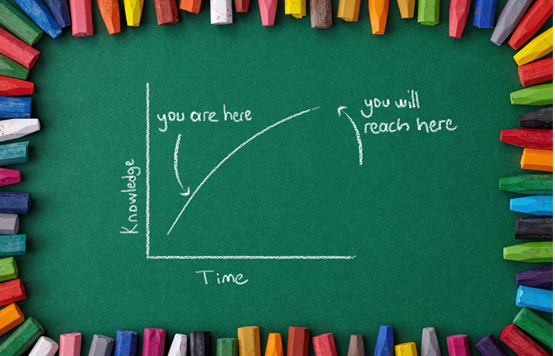
Learning something new. Applying something you know in a new way.  Either way you put yourself on a learning curve.

Somewhere in growing up, however we faced an interesting choice.  It was interesting, in part, because we aren’t always aware a) there is a choice and b) we’re choosing.

The choice?

We decide whether or not we can bear the impact of not being perceived as being REALLY good at it (whatever ‘it’ is). This poses a problem all ‘round.

Our learning curves are not just ours – they also belong to and affect the rest of the teams we work within.

One leadership challenge is accommodating and even encouraging the learning curve.

Without a learning curve individuals and organizations go stagnant.

That said, with a learning curve there are mistakes, missteps, and a period when progress seems surely slow rather that slow and sure.

How much stagnation are you willing to risk to avoid the growing pains of a learning curve?

If you believe in the value of leadership in teams check out our videos on leadership driven project management on the KSP Partnership YouTube channel at https://tinyurl.com/KSP-Partnership-YouTube


Resurrecting the Project Manager Role

Resurrecting the Project Manager Role

I stopped and blinked at a headline on a Linked In post and choked back a chuckle.

It was titled ‘The Death of The Project Manager’.

The provocative title (for project people, that is) did its work. I clicked in.

The author, a professor named Andre Barcaui, suggests that the increasing use of the Agile approach with a ‘flat’ team dynamic – ‘team leads’ swapped out for guiding ‘coaches’ –  is part of the decline of the project manager’s role.

The second part is the rise of AI (artificial intelligence) and its ability to crunch data sets and proffer logical outcomes and conclusions. Theoretically, this leads to one logical outcome.

He also suggests that decisions made from ‘instinct’ may be not just outdated but even harmful.

And there you have it: ‘The death of the project manager.’

To which I say, “Hold on Huxley, that’s a huge stretch”.

But first a caveat. Christina “CK” Kerley, a top technology futurist, suggests in her speeches and sessions that we want technology to take over tasks – those tasks that require lots of processing but little judgement.

I love having data crunched by tech. That allows me to do critical thinking, the creative problem-solving that is the sweet spot of any project manager or team. There are absolutely large data sets that I am happy to have crunched and parsed for me.

But that isn’t what the article suggests. It sees a world where leaders are replaced by a sort of group dynamic.

Nice try. Groups and teams are essential to the development and production of a project but there always needs to be one that takes the lead and ultimate responsibility for the process and end result.

In practical terms in the scenario by Barcaui, there would be a room full of well-meaning people on deadline day pointing fingers at each other for the failure to deliver. Blaming the AI will never get anyone very far.

The role of the project manager gone?

If you agree that the project manager’s leadership means more than creating massive archives of records, and you agree team dynamics, the culture of the team’s productivity and progress, are primary responsibilities of the leadership role of the project manager, I would suggest that the opposite is true.

Better tools mean the best project leaders will shine, and a project team will stay tightly focused on the process and deadline.

If you believe that how your people shine as project leaders counts, please sign up for KSP Academy where leadership driven project management respects people – and uses tools and methodologies.


Upcoming Events

No upcoming events

Keep In Touch